Designing the Tangible Interface
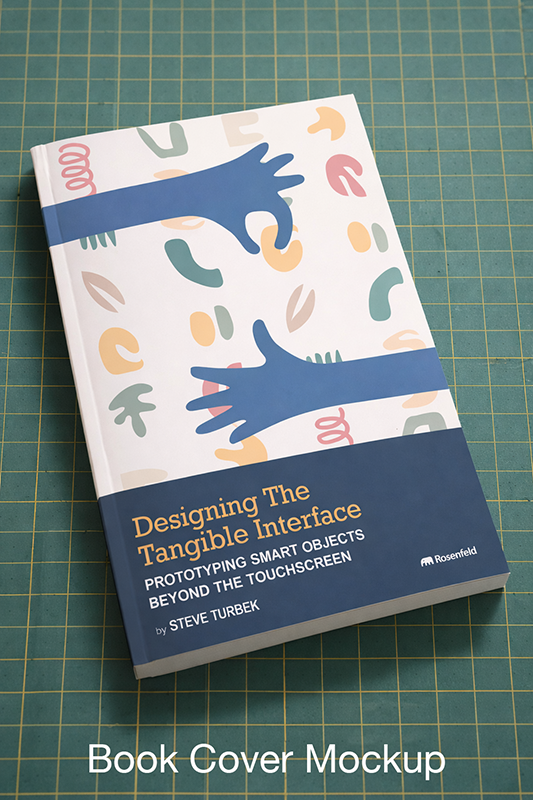
Prototyping Smart Objects Beyond the Touchscreen
By Steve Turbek
To be published by Rosenfeld Media in 2027
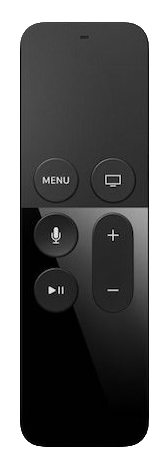
"Why is this remote so confusing? I thought Apple was good at design."
— Steve's mom, on her Apple TV remote
The Problem
Software ate the world. Car dashboards, cameras, thermostats, music players — all replaced by featureless glass rectangles. The result: products that look the same, feel the same, and exclude people who used to be able to use them.
Touchscreens don’t work for surgeons mid-procedure. They don’t work for cyclists, or drivers, or people with neurodegenerative conditions. Touchscreens also don’t work for people trying to get off their screens and live in the real world.
Physical controls can solve these problems, if designers know how to build them. Most were never taught.
What This Book Is
Designing the Tangible Interface is a hands-on guide for designers who want to build interactive physical products and don’t know where to start. It connects the traditions of Industrial Design and User Experience: the forms people hold and the functions those forms deliver.
You’ll learn what lives inside the objects people hold, why it matters for how they feel, and how to build working prototypes with real sensors and components. No engineering experience required, just curiosity and a sense of play.
Read a free chapter
Thanks for subscribing!
Check your inbox for the free chapter, "How A Remote Got Lost." The weekly newsletter arrives Tuesday-ish.
Links you can click now
- Subscriber-only newsletter archive
- Turbek.com — Articles and projects
- Tangible Interface Lab
Organized Around the Senses
Seven senses, two case studies, and more than 40 hands-on Microbit projects. Each chapter pairs the science of a sense with the products that got it right (or spectacularly wrong), then has you build your own.
Touch Buttons, debouncing, haptics, force and capacitive sensing. The Nest Thermostat, the ROLI Seaboard, and the SmartKnob. Build: haptic feedback, capacitive touch pads, a breath-pressure sensor.
Sight Why there’s no frequency for magenta, why screens need blue LEDs to make white, and the light you can’t see. The Tuneshine album-art display. Build: Neopixel color mixing, a dimmable LED, a PIR motion sensor.
Proprioception The sense that lets you touch your nose with your eyes closed. The 1989 Mattel Power Glove, BMW iDrive, and MiMU musical gloves. Build: a slider with zones, a finger-bend sensor, a rotary-encoder color painter.
Position and Orientation Which way is up, why your phone rotates the wrong way in bed, and why the Hall sensor took over the world. Airbags, step counters, and VR headsets. Build: a pedometer, a compass, a touchless magnet switch.
Sound John Cage in an anechoic chamber, chip tunes, and pulling signal out of noise. The Clapper and the UltraCane. Build: a wireless musical instrument, a VU meter, an ultrasonic distance sensor.
Taste and Smell Why 80% of flavor is smell, and the breathalyzer as precision theater. Build: an alcohol sensor, a plant water monitor, an indoor weather station.
Extra Sensory Perception Infrared, RFID, Bluetooth, radio, and mind reading (sort of). TV-B-Gone and the Star Wars Force Trainer. Build: read and control your TV remote, an RFID tap-to-login, a Bluetooth flying mouse.
Plus An obscenely short history of industrial and UX design. Prototyping as a design philosophy, with Juicero as the cautionary tale. A Microbit crash course with a drum machine and an OLED video game. And two case studies: The Rise and Fall of Car Touchscreens and How A Remote Got Lost.
“Fail Fast” Is Terrible Advice
Learn cheaply is how great things are made.
Every product that matters started as someone finding a need and wondering “how might we,” or finding a cool widget and wondering “what if?”
A prototype is a cheap bet. You learn more from a cheap prototype that fails in testing than from months of sketching and theorizing about what people might use.
Who It’s For
- Designers with an Arduino or Raspberry Pi sitting in a drawer
- UX designers who want to work in the real world, or who have to take on a new domain of UX
- Industrial designers adding interaction to their practice
- Anyone prototyping a product targeting home electronics, transportation, or robotics
- People who want to make a cool product for their home or studio
From the Newsletter
Subscribers have already read early drafts of nine chapters. A few pieces are public:
Conversations with people who make tangible products:
- Greg Maletic and Neven Mrgan of Panic, on creating the Playdate game console
- Tobias Butler, software engineer turned hardware entrepreneur, on building Tuneshine
- Ted Ullrich of Tomorrow Lab, on why the gap between prototype and mass production is harder than the invention itself
- Amber Case of the Calm Tech Institute, on why physical buttons, dials, and soft lights let technology fade into the background
The Tools
BBC Microbit — A credit-card sized computer programmable from any browser, with built-in accelerometer, compass, temperature sensor, and LED display. Easy to start, no software to install.
Component kit — Sensors chosen to cover the major interaction patterns in product design: touch, motion, distance, temperature, humidity, light, sound, and more.
AI assistants — Used throughout to explain errors and suggest fixes, so you focus on design decisions rather than syntax.
About the Author
Steve Turbek is an industrial design student turned digital UX designer turned teacher at Pratt Institute, where he runs the Tangible Interfaces Lab. He spent decades as head of design at financial services companies, building products used by millions of people. Returning to physical design required starting over as a beginner — an experience that became the research for this book.
Student projects from the lab include custom game controllers, portable music players, smart beekeeping hives, and electronic personal safety devices.
More at tangible.turbek.com
Get the Free Chapter
Subscribe and get "How A Remote Got Lost," the full case study, plus weekly notes on prototyping experiments, interviews, and dispatches from writing the book.